
Flexible Digital Content Use
With uniteCMS, we rely on a flexible headless CMS that structures content efficiently and makes it usable across different digital channels. This creates a stable foundation for websites, platforms, and custom digital solutions with a clear architecture and a scalable setup.
In our projects, we use uniteCMS to map content processes clearly, design intuitive backends, and build digital systems in a way that allows them to grow sustainably alongside changing requirements and expanding content.
uniteCMS. Headless many Possibilities.
Versatile Use Cases
Digital content today needs to function reliably across a wide range of systems. uniteCMS provides a central foundation where content, data models, and editorial workflows are clearly structured and efficiently managed. Instead of maintaining content repeatedly in different systems, structured content is managed in one place and made available across multiple digital applications.
The technical foundation behind this is the headless approach, with a clear separation between content management and frontend. Content is maintained independently of its output, while websites, platforms, or custom applications can access it flexibly. This creates greater freedom in UX/UI development, simplifies integrations, and makes interfaces easier to plan and manage.
Mapping Individual Business Logic
uniteCMS is not limited to traditional website structures. Its powerful GraphQL API makes it possible to implement individual business logic, connect external systems, and structure complex data flows without detours through proprietary solutions. This makes uniteCMS an attractive choice for projects that go far beyond a traditional website — from data-driven platforms to tailored digital products.
A Backend That Truly Fits
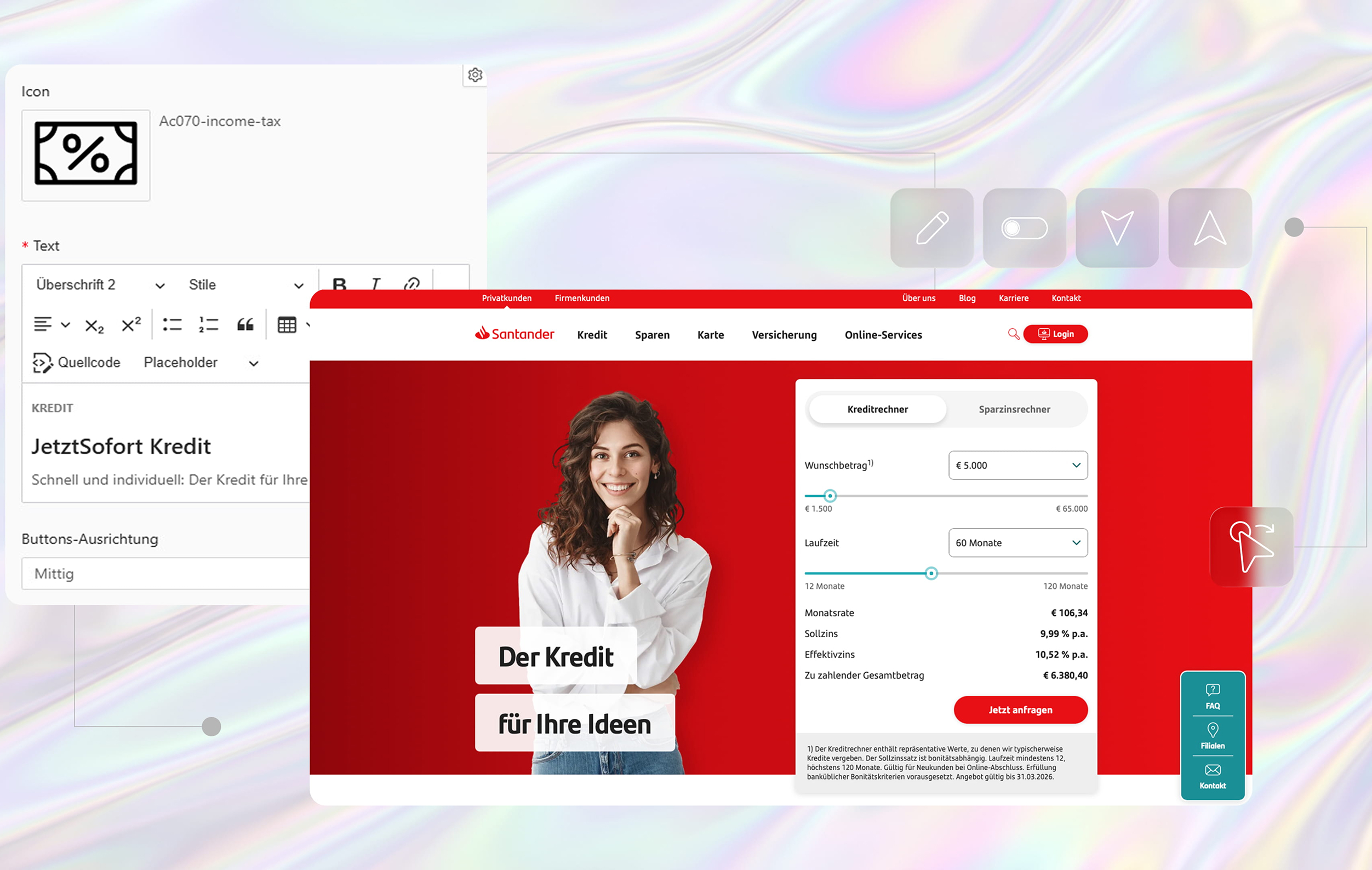
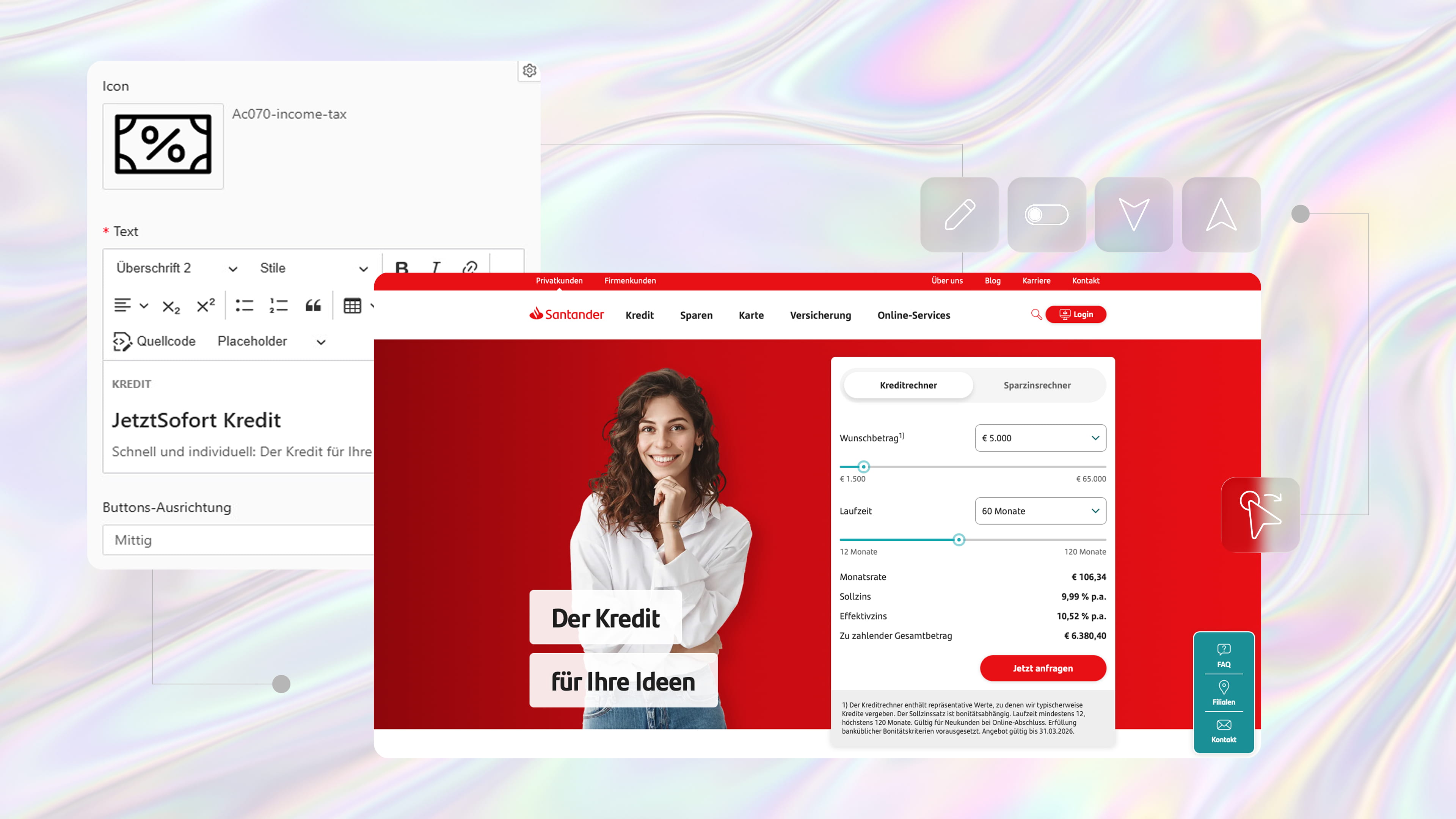
One of the key advantages of uniteCMS lies in the flexible design of the backend. The administrative interface can be tailored specifically to each project’s requirements. Editorial teams and other users see exactly the content blocks, fields, and functions they actually need in their day-to-day work. With 50+ field types and five flexible data views, the result is an administration interface that adapts to the project — not the other way around.
Practical from Day One
uniteCMS includes all the essential features needed for professional projects: multilingual capabilities, granular roles and permissions management, media management, revisions, and an integrated form builder — all within one system that combines technical flexibility with clear workflows for everyday content administration.
With uniteCMS, content can be modeled precisely according to the requirements of each project. More than 50 field types enable the structured management of texts, images, files, references, geodata, and many other data types. Features such as conditional fields make it possible to show or hide fields depending on the context — keeping the backend clear and tailored exactly to the specific use case.
A traditional CMS manages content and delivers it directly to a specific output channel — usually a website. A headless CMS like uniteCMS clearly separates these two layers. Content is managed centrally and delivered via API to any frontend — websites, apps, digital platforms, or custom applications.
Another key difference lies in the system architecture itself: while traditional CMS platforms often rely on predefined structures and rigid content schemas, uniteCMS uses a custom data model developed individually for each project. Content types, fields, and structures are tailored specifically to the requirements of each client — not the other way around. Its modular architecture also makes it possible to combine exactly the functions a project truly needs. The result is not an off-the-shelf standard solution, but a system that is built from the ground up to match the specific requirements of each project. uniteCMS is built on the Symfony framework and therefore comes with a wide range of open-source components.
Yes, uniteCMS offers content versioning. Revisions are stored automatically, making changes transparent and allowing earlier versions to be restored when needed. This is especially valuable for projects with multiple editors or frequent content updates.
Yes, this is one of uniteCMS’s core strengths. Its GraphQL API can be used not only to retrieve content, but also to implement custom business logic and integrate external systems in a clean, structured way. This makes uniteCMS suitable not only for traditional websites, but also for data-driven platforms, internal tools, and tailored digital products.
Yes, uniteCMS natively supports multilingual content management. Content can be maintained in multiple languages without the need for separate systems or workarounds. Languages such as Arabic and Chinese can also be handled without issues. This makes uniteCMS especially suitable for international projects or platforms with multilingual target audiences.
uniteCMS includes granular permissions and roles management. Access rights can be defined in detail for each user, team, or role — both at the level of individual content types and down to specific fields. This ensures that each person in the system can only see and edit what is relevant to them.